
Reforming and Modernizing the Radiation Protection Framework
In response to the news of of the NRC attempting to remove ALARA: (read full article below).
Direct Link to Submit a Comment: https://www.regulations.gov/commenton/NRC-2025-1140-0001
This is my public comment that I sent August 16 2026. Feel free to use it to start off your own. The files, any AI tool you have, if you’re unsure.
“Comment on NRC-2025-1140
Document ID
NRC-2025-1140-0001
I am a writer, researcher, mother, and resident of Casper, Wyoming. With new nuclear reactors and fuel facilities being planned in Wyoming, these radiation rules could directly affect workers, families, and communities here.
I oppose the proposed weakening of the NRC’s radiation protection rules.
The NRC proposes to remove ALARA, meaning “as low as reasonably achievable,” from its regulations and replace it with a graded dose-management approach. But the NRC also admits at 91 FR 43462 that “no consensus-supported, regulation-ready alternative model to the LNT model exists at this time.” Removing a long-standing protection before there is a scientifically accepted replacement does not make sense.
The proposal also makes several direct changes:
• It raises the air-emission constraint in 10 CFR 20.1101(d) from 10 mrem per year to 25 mrem per year. That is a 2.5-times increase. It would also apply a 25-mrem annual criterion to reactor effluents under Appendix I to Part 50.
• Proposed Section 20.1205 would allow an adult worker to receive up to twice the normal annual occupational dose limit by using dose they did not receive during the current and previous four years. For the 5-rem annual whole-body limit, this could allow up to 10 rem in one year. Declared pregnant workers and minors would be excluded, but other workers would still face the increased annual exposure.
• It deletes the current limit of 2 mrem in any one hour in an unrestricted area.
• It would allow licensees and applicants to request public dose limits above 100 mrem per year on a case-by-case basis. Proposed Section 20.1301(d) would also remove the current 500-mrem upper limit on what may be requested.
• It changes reporting so an exceedance of the annual public dose limit would be reportable only if the person’s total dose for the current year and previous four years exceeds 500 mrem. An annual limit should still mean something each year.
These are not just wording updates. They raise allowable exposures, remove a short-term public protection, and give licensees more room to exceed normal limits.
The NRC says the current public limit of 100 mrem per year already provides adequate protection. If that is true, the NRC should not create new ways to exceed it or remove the current ceiling on requested exceptions.
Wyoming residents are being asked to accept new reactors, nuclear fuel manufacturing, radioactive-material transportation, and long-term waste responsibilities. This is the wrong time to reduce radiation protections or make increased exposure easier to approve.
Please keep ALARA in the regulations, retain the 10-mrem air-emission constraint, reject the planned occupational dose-limit extension, keep the 2-mrem-in-one-hour public limit, preserve the existing limits on public-dose exceptions, and require reporting when an annual limit is exceeded.
Efficiency should come from better technology and better management, not from allowing workers or the public to receive more radiation.
[Name/Anon]
Casper, Wyoming
Submitted in my individual capacity”
Attached files: (You add these to the file box below, click the link, hit download, and drop it in the box.) Choose from below.
I dropped these files into their file box:
Sanon Ofre Safety sheet: https://sanonofresafety.org/wp-content/uploads/2018/06/spentnuclearfueldrystoragefactsheet2018-06-15.pdf
Title: National Institute of Standards and Technology (NIST) – Notice of Violation
Short Name: NOV ML18173A278
Full URL: https://www.nrc.gov/docs/ML1817/ML18173A278.pdf
[cite: 2]
Pertinence to Comment: Directly addresses why 10 CFR 20.1101(b) (ALARA) cannot be removed or replaced with non-binding graded approaches. This enforcement action demonstrates that without 10 CFR 20.1101(b), the NRC lacks explicit legal authority to cite licensees for bad work practices or avoidable occupational exposures as long as doses remain below numerical ceilings.
Title: Providence Alaska Medical Center – Enforcement Action and Notice of Violation
Short Name: EA ML18306A565
Full URL: https://www.nrc.gov/docs/ML1830/ML18306A565.pdf
[cite: 3]
Pertinence to Comment: Illustrates the importance of strict annual dose tracking and administrative ALARA action levels. The case highlights how failing to monitor internal action levels allowed worker exposure spikes to go uninvestigated, demonstrating why annual limits and short-term exposure safeguards must remain intact rather than being averaged out over multi-year periods.
Title: Technical Review of 10 CFR 20.1101(b) ALARA Criteria Compliance
Short Name: ML111610136
Full URL: https://pbadupws.nrc.gov/docs/ML1116/ML111610136.pdf
[cite: 4]
Pertinence to Comment: Evaluates licensee compliance with 10 CFR 20.1101(b) ALARA criteria specifically for air emissions, effluents, and offsite boundary doses. It provides the technical basis for preserving strict 10 mrem/yr air-emission constraints and public boundary protections rather than expanding allowable release thresholds.
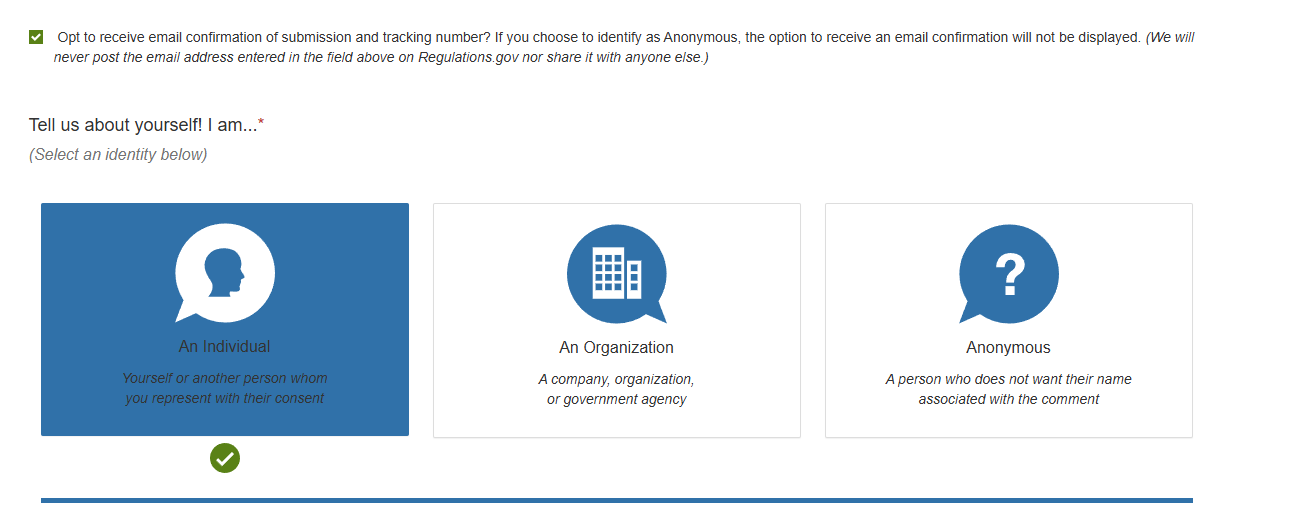
***Choose individual at the bottom after putting in Comment and filling out information OR choose ANONYMOUS if you do not want your name brought out into public associated with the comment. Either way, it works.
What to Expect:
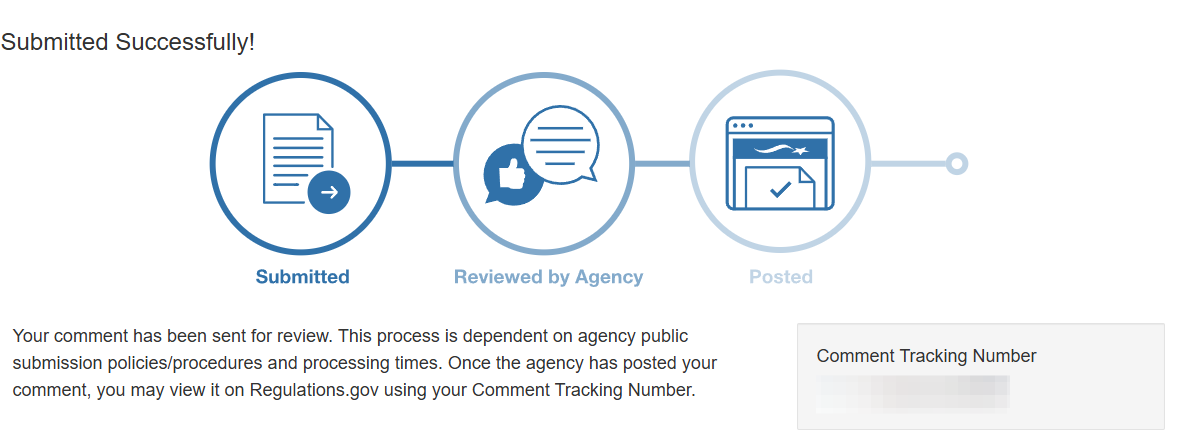
Took me less than fifteen minutes; maybe twenty because I took the screenshots and explained the process as I went to share with you guys.
Sources:
Regulations.gov Main Document Page: https://www.regulations.gov/document/NRC-2025-1140-0001
Official Federal Register Notice: https://www.federalregister.gov/documents/2026/07/15/2026-14208/reforming-and-modernizing-the-nrcs-radiation-protection-framework
Official GovInfo Record: https://www.govinfo.gov/app/details/FR-2026-07-15/2026-14208
Talking Points and Links Guide (PDF download): https://beyondnuclear.org/wp-content/uploads/2026/07/NRC-PR-2025-1140-Talking-points-and-links.pdf
Sanon Ofre Safety sheet: https://sanonofresafety.org/wp-content/uploads/2018/06/spentnuclearfueldrystoragefactsheet2018-06-15.pdf
 Boomtown or Meltdown
Leave a comment