
Originally published on Boomtown or Meltdown Facebook – Brought Here to Expand Upon
To Mayor Shay Lundvall, City Administrator Mike Cole, the Members of the Gillette City Council, the Campbell County Board of Commissioners, and the Campbell County Legislative Delegation:
This open letter is being published because the citizens of Gillette, Campbell County, and the State of Wyoming deserve complete, unvarnished truth regarding the $500 million BWX Technologies (BWXT) and Kairos Power nuclear proposal at Pronghorn Industrial Park.
For over a year or more, public officials have operated under the cover of non-disclosure agreements, undisclosed executive meetings, and corporate PR briefings at Gillette College. While local media headlines promote claims of high-tech jobs “without producing nuclear waste,” the public record reveals a pattern of procedural secrecy, unaddressed resource demands, and misleading technical claims.
It is time to call out those in office by name, lay out the facts, and hold our elected servants accountable.
1. The Backroom NDA and Unannounced Meetings: Lundvall, Cole, Ford, and Clem
Public trust is built on open governance, yet the foundation of this nuclear project was laid in total secrecy.
Mayor Shay Lundvall and City Administrator Mike Cole: Under Resolution 2862, executed in February 2024, the City of Gillette entered into a binding Non-Disclosure Agreement (NDA) with BWXT. Over the subsequent 18 months, municipal records reveal that city leaders expended over $21,000 in taxpayer travel funds while holding only a single formal public briefing.
Commissioners Jim Ford and Scott Clem: On September 2, 2025, Campbell County Commission Chairman Kelley McCreery stood before the Gillette City Council and publicly called out unannounced, non-public strategy meetings held between Mayor Lundvall, Administrator Cole, Commissioner Jim Ford, and Commissioner Scott Clem alongside federal Department of Energy (DOE) and corporate representatives. Chairman McCreery confirmed that the rest of the County Commission and the public were kept in the dark while private assurances were made.
State Senator Troy McKeown’s Warning: We commend Senator Troy McKeown for confronting the Gillette City Council on the public record, demanding to know why an NDA was executed in the first place and warning Wyoming citizens about attempts to quietly normalize nuclear industrial siting.
When public officials conduct nuclear development planning behind closed doors, they violate the basic principles of constitutional governance.
2. Exposing the “No Waste” Spin: The Class A LLRW Reality
During the July 2026 corporate briefing at the Gillette College Technical Education Center, BWXT executives presented a narrative that the plant would operate “without producing nuclear waste”.
This statement misrepresents federal regulatory definitions. While fuel fabrication plants do not produce spent fuel rods from operating reactors (High-Level Waste), federal regulations under NRC 10 CFR Part 70 dictate that nuclear fuel manufacturing inherently produces continuous operational streams of Class A Low-Level Radioactive Waste (LLRW).
The proposed Pronghorn facility will routinely generate:
Radioactive particulate scraps and off-spec enriched uranium kernels.
Contaminated protective equipment, analytical laboratory tools, and process washings.
Heavy-duty HEPA air filtration media and spent chemical reagents.
Regulated liquid and airborne effluents requiring scrubbers and controlled environmental release.
Claiming a nuclear fuel fabrication plant produces “no waste” misinforms the public. Operational LLRW must be containerized, stored on-site, and transported across Wyoming public highways to licensed out-of-state disposal facilities.
3. The Microreactor Piggyback: BANR and Kairos Integration
The $500 million Pronghorn facility is not an isolated manufacturing plant. Filings submitted to the Wyoming Energy Authority confirm that this fuel plant is designed as a merchant supply hub to piggyback the regional deployment of BWXT’s 75 MWt BANR (BWXT Advanced Nuclear Reactor) microreactors and Kairos Power experimental systems.
Governor Mark Gordon and the $100 Million Matching Grant: Governor Gordon and state energy administrators approved $100 million in public matching funds to subsidize BWXT’s baseline supply chain.
The Siting Strategy: By establishing a centralized TRISO fuel hub in Gillette, corporate developers create the industrial footprint necessary to deploy modular microreactors directly across Campbell County and the Powder River Basin.
4. Conflicts of Interest: Councilwoman Heidi Gross and Gillette College
City Councilwoman Heidi Gross (Ward 3) occupies a dual role as an elected municipal official and an executive administrator at Gillette College.
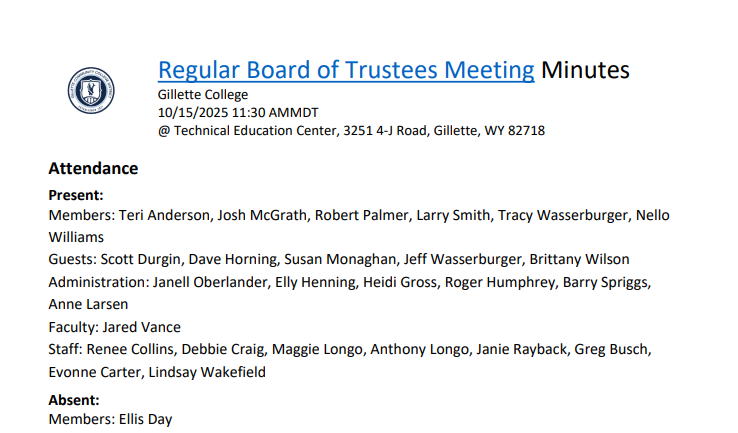
Official Gillette College minutes show that BWXT executives met with College President Janell Oberlander and Foundation Executive Director and Gillette Councilwoman Heidi Gross to discuss BWXT’s programming and workforce needs.
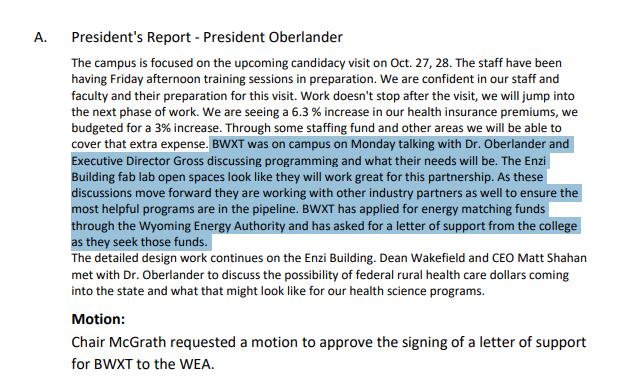
The minutes specifically identify open fab-lab space in the publicly supported Enzi Building as potentially suitable for the partnership. During the same meeting, trustees approved BWXT’s request for a college letter supporting its application for $100 million in Wyoming Energy Authority funding.
When elected officials leverage higher education resources to benefit private corporate applicants under active municipal negotiation, the public has every right to question where their true loyalties lie.
5. Demands on the Madison Aquifer and Threat to Coal Jobs
Gillette City Council members Jack Clary, Tim Carsrud, Nathan McLeland, Greg Smith, and Terry West must answer for the long-term industrial impacts on local resources:
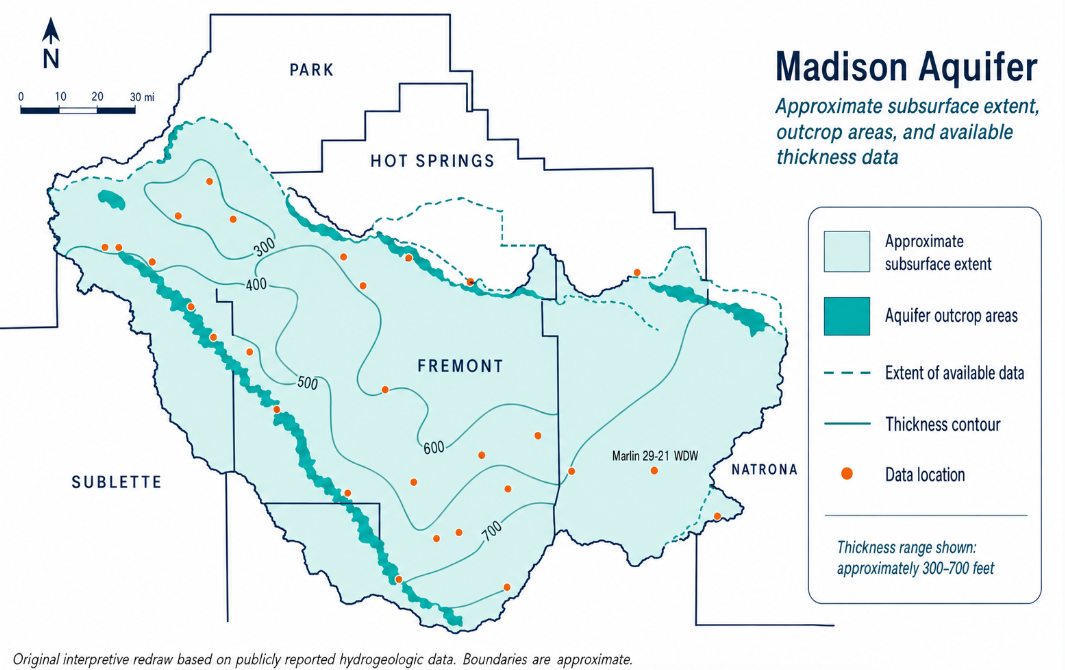
Water Extraction: Processing enriched uranium into ceramic TRISO fuel compacts requires heavy industrial water usage, placing direct demands on our local Madison Aquifer.
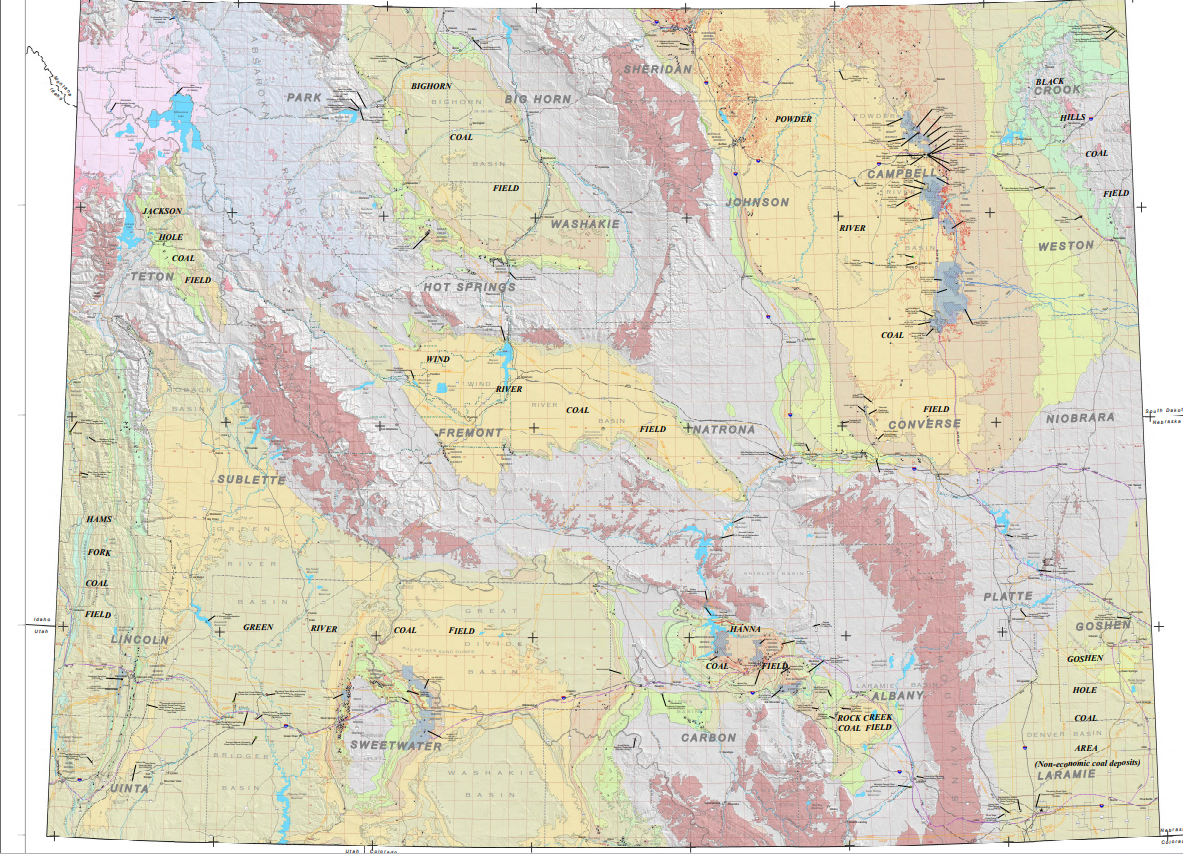
Displacement of Coal: Councilman Jack Clary correctly noted on the public record that pushing nuclear infrastructure directly threatens Powder River Basin coal jobs, accelerating coal-fired power plant retirements and destabilizing our regional tax base.
6. Federal Transparency Laws Mandate Disclosure (10 CFR § 2.390)
To Mayor Lundvall, Administrator Cole, and the City Council: Your local NDA does not override federal law.
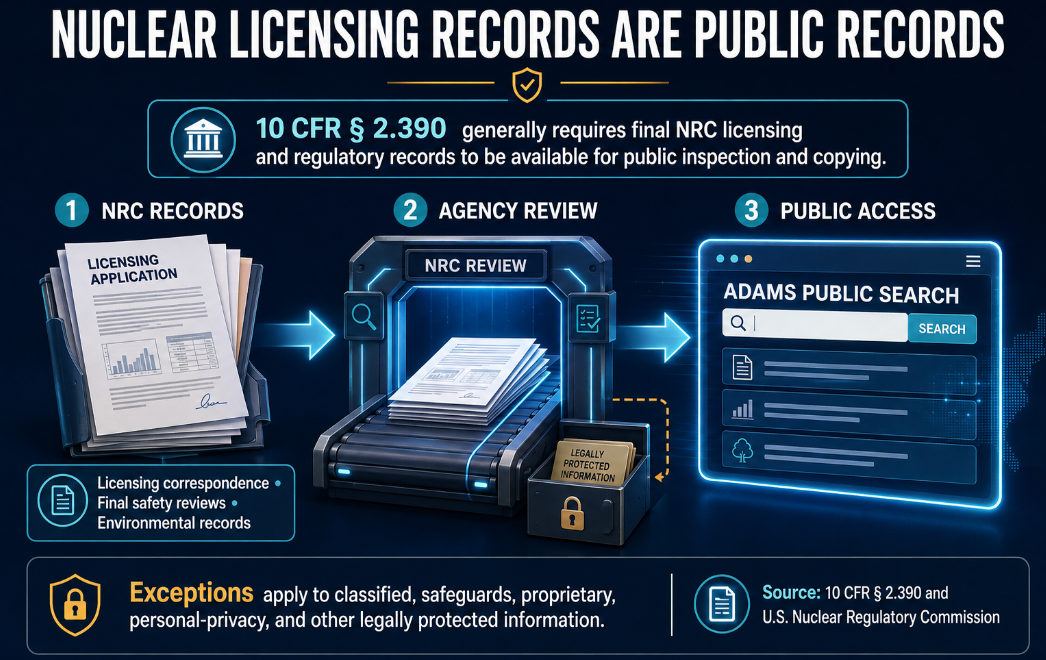
Under federal law (10 CFR § 2.390), the Nuclear Regulatory Commission mandates that all formal licensing submittals, safety evaluations, and environmental reports must be published transparently in the online ADAMS database.
It is also interesting to note that 10 CFR § 2.390(b)(2) explicitly states that it is NRC policy to uphold “the right of the public to be fully apprised as to the basis for and effects of licensing actions”.
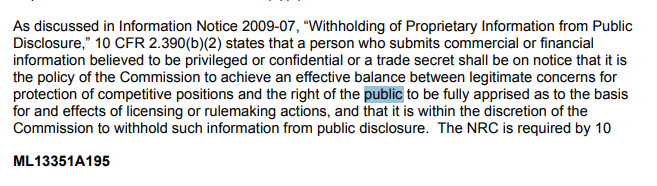
Hiding behind corporate confidentiality agreements while utilizing public funds violates the spirit of federal transparency requirements.
Our Demands for Immediate Public Accountability
We demand that the Gillette City Council, Campbell County Commission, and state legislative representatives take the following steps immediately:
Dissolve All Municipal NDAs: Rescind Resolution 2862 and make all correspondence, utility feasibility studies, and intergovernmental records fully available under the Wyoming Public Records Act.
Conduct an Independent Water Audit: Order an independent hydrological study on the total drawdown impact on the Madison Aquifer before any land transfers or utility extension contracts at Pronghorn Industrial Park are finalized.
Mandate Formal Public Hearings: Host open, televised joint public hearings featuring independent technical experts—not corporate PR representatives—allowing citizens to cross-examine claims regarding Low-Level Radioactive Waste, effluent releases, and transportation safety.
Respect the Voter Consent Principle: Require a binding local voter referendum before any state matching grant funds or local tax incentives are disbursed to private nuclear developers.
Quoting constitutional principles during election cycles is easy; true leadership is demonstrated through transparency, fiscal restraint, and defending public property rights.
To every resident of Campbell County and Wyoming: Join us, attend the City Council and County Commission meetings, demand answers from your elected officials, and inspect the public record.
Read the full investigative reporting series:

Join our grassroots community organization: https://www.facebook.com/groups/24464672599861297
Published by Boomtown or Meltdown
Dedicated to Transparency, Property Rights, and Accountability in Wyoming Energy Governance.
 Boomtown or Meltdown
Leave a comment