
In 1994 a statewide poll captured overwhelming opposition to nuclear waste storage. The result is a reminder of how Wyoming’s past still shapes its energy choices today.
At a Glance:
A 1994 poll showed overwhelming opposition to nuclear waste storage in Wyoming.
Skepticism grew out of uranium mining contamination and broken industry promises.
Communities voiced opposition without the internet, showing the strength of public memory.
Today, Wyoming has more tools to organize and share information, but the risks remain.
The past is a warning that nuclear promises often come with generational costs.
Back in the 1990s, Wyomingites had their say, and it was not in favor of nuclear. Long before hashtags, Facebook groups, or online petitions, residents across the state voiced overwhelming opposition to nuclear waste storage. The debate was loud, clear, and rooted in lived experience.
A Long History of Saying No
This was the pre-Internet era. Communities did not have the modern tools of organizing we take for granted today, but the message still traveled. A statewide poll conducted in 1994 captured what many Wyoming residents already knew in their bones: uranium had left scars on the land, industry promises had fallen flat, and few were eager to invite more nuclear risk into their backyards.
The conversation is not new.
In fact, Wyoming lawmakers and watchdog groups like the Wyoming Outdoor Council have repeatedly pushed back on efforts to make the state a permanent storage site for radioactive waste.
Recent commentary argues that storage proposals remain rushed and short-sighted, while lawmakers have gone on record rejecting similar ideas. Across decades, the sentiment is remarkably consistent: no amount of money is worth turning Wyoming into a nuclear dump.
The Poll Itself
In 1994, a statewide poll was conducted to measure public opinion on nuclear waste storage and the possible expansion of nuclear projects in Wyoming. The results left little room for interpretation. Residents overwhelmingly opposed the idea of turning the state into a home for nuclear waste.
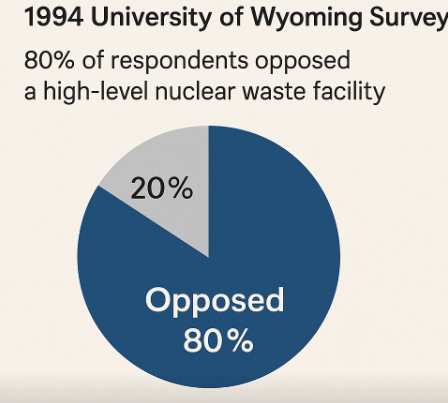
Pie chart visual. Data from WyoFile
The strength of that opposition mattered.
At the time, Wyoming was still carrying the heavy legacy of uranium mining. Communities had lived with contaminated water, broken reclamation efforts, and promises from industry that never materialized into real cleanup.
For many, the risks were not abstract. They were daily reminders of what happens when extractive industries move on and leave the damage behind.
That poll captured a moment in time. It reflected deep public distrust built on lived experience. As recent reporting in the Uinta County Herald reminds us, skepticism about turning Wyoming into a nuclear dumping ground has been consistent across decades. Lawmakers have also echoed this stance, with legislative leaders rejecting proposals to invite storage into the state.
Groups such as the Wyoming Outdoor Council continue to track these debates and highlight the risks that have never gone away.
Historical Context
By the time the 1994 poll was conducted, Wyoming already carried the scars of uranium mining. Entire landscapes had been torn apart, and reclamation efforts often fell short of what was promised. Communities were left with contaminated water and toxic tailings that continued to leach into the land long after mining companies had moved on.
Tribal nations in particular experienced lasting harm. The legacy of uranium extraction brought long-term health issues and environmental damage that remain part of the story today. These realities created a deep well of distrust toward new industry proposals.
That is why the poll numbers mattered so much. People did not need abstract warnings about how long nuclear waste would remain dangerous. They had already seen what happened when cleanup efforts failed and when industry promises went unfulfilled.
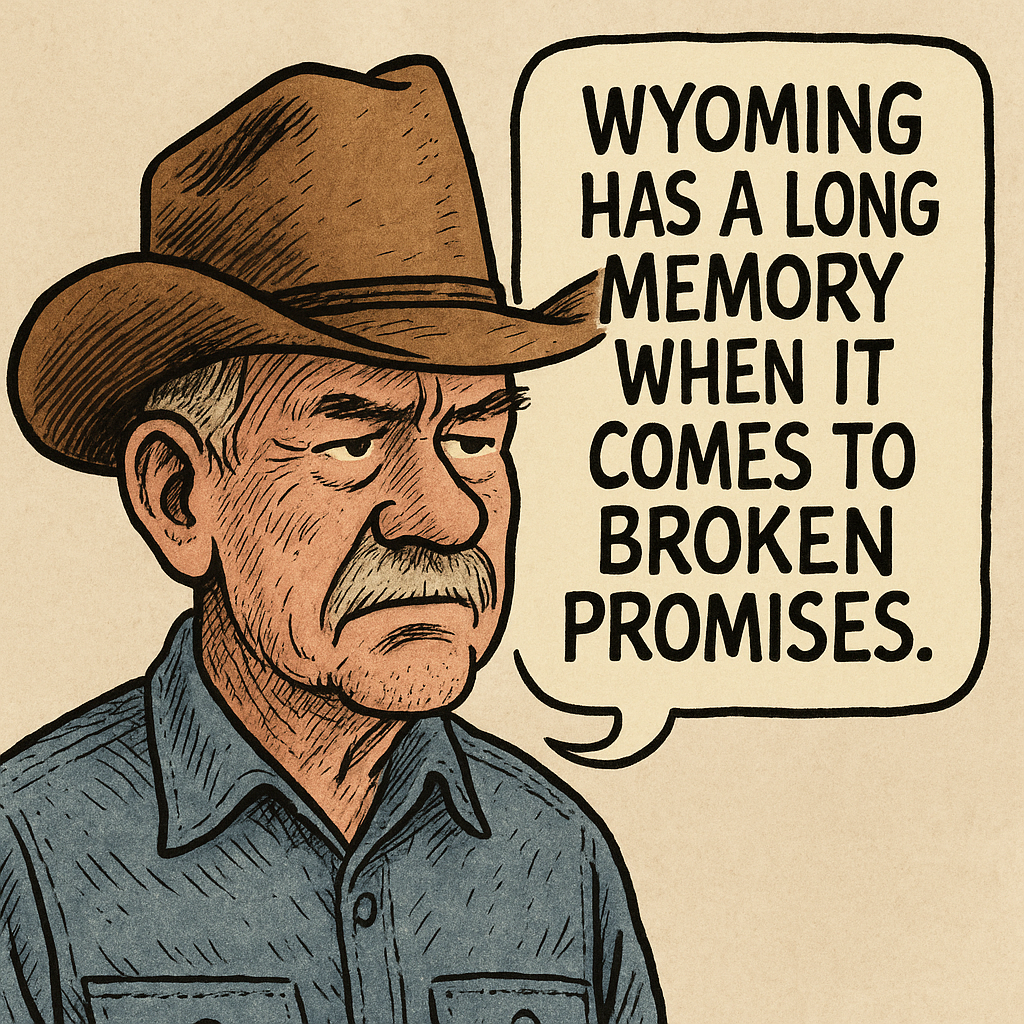
Image generated by DALL-E
As recent coverage notes, Wyoming has a long memory when it comes to broken promises, and that history continues to shape how residents view new proposals for nuclear development.
Then vs. Now
In 1994, there was no social media, no online petition platforms, and no quick way to share information across the state. Even so, thousands of Wyoming residents voiced their opposition to nuclear waste storage. The effort required more time, more face-to-face organizing, and more persistence, yet the result was clear and overwhelming.
Today, communities have far more tools at their disposal. Information can be shared instantly. Petitions can collect thousands of signatures in a matter of days. Local forums can be streamed statewide, and the media has more channels than ever to cover public debate.
If the opposition was that strong in the 1990s, when it took real work to organize, why would Wyoming be less cautious now? The risks have not gone away, and the lessons from that earlier debate are still highly relevant.
What This Poll Tells Us Today
Public opinion has always been a driving force in Wyoming’s energy debates. Industries rise and fall, but communities remember the costs that are left behind. Residents know the difference between promises on paper and realities on the ground.
The poll from 1994 is a reminder that skepticism is not the same as fear. It is the product of lived experience. People saw what happened with uranium mining. They saw how cleanup was delayed or incomplete. They saw water supplies compromised and land left scarred.
That memory lingers. It explains why Wyoming citizens have consistently questioned whether nuclear development is worth the risk. The caution is not born of panic. It is born of history.
Closing Reflection
The poll from 1994 is more than a historical footnote. It is a snapshot of Wyoming’s values at a moment when the risks of nuclear development were already clear. That clarity still matters today.
If Wyoming once said no so clearly, what will the state say the next time it is asked?
 Boomtown or Meltdown
Leave a comment