
If experts won’t stay, should communities trust the agency?
At a Glance:
Chair Christopher Hanson was fired, Commissioner Annie Caputo resigned early, and Executive Director of Operations Mirela Gavrilas retired, leaving major gaps in leadership.
Trump’s executive orders placed the NRC under direct presidential control, raising concerns about regulatory capture.
An internal audit found severe hiring delays, unreliable recruitment data, and overburdened HR staff.
One-third of NRC employees are already eligible for retirement, just as advanced reactor applications surge.
If NRC experts themselves no longer trust the agency, why should communities living near proposed nuclear sites?
The Nuclear Regulatory Commission (NRC) was once hailed as the “gold standard” of nuclear oversight. Today, it finds itself in turmoil: commissioners resigning early, senior scientists retiring, and staff recruitment hobbled by inefficiency.
NRC logo from website
At the very moment when Washington is pushing for a nuclear renaissance from small modular reactors to military-driven projects, the agency charged with keeping the public safe is struggling to hold on to its own experts.
The Watchdog in Retreat
If the Nuclear Regulatory Commission is losing commissioners, senior scientists, and staff in droves, what does that say about the integrity of the regulator itself?
For decades, the NRC’s independence has served as a firewall between communities and the risks associated with nuclear power. Recent resignations and firings suggest that political interference, workforce dysfunction, and regulatory capture are eroding that firewall.
Image generated by DALL-E
At a time when advanced nuclear projects are proliferating, the NRC is expected to serve as the watchdog. But what happens when the watchdog keeps walking away?
Leadership Exodus
The turmoil inside the NRC is most visible at the top. In June 2025, Democratic Chair Christopher Hanson was fired by President Trump “without cause,” an unparalleled move that legal experts described as highly questionable.

Christopher Hanson, former Chair of the U.S. Nuclear Regulatory Commission
Hanson had been a defender of the commission’s independence, but his removal was widely criticized as a textbook case of regulatory capture.
Just weeks later, Republican Commissioner Annie Caputo announced her resignation a year before her term was set to expire. In her official statement, Caputo said she wanted to “focus on family.”
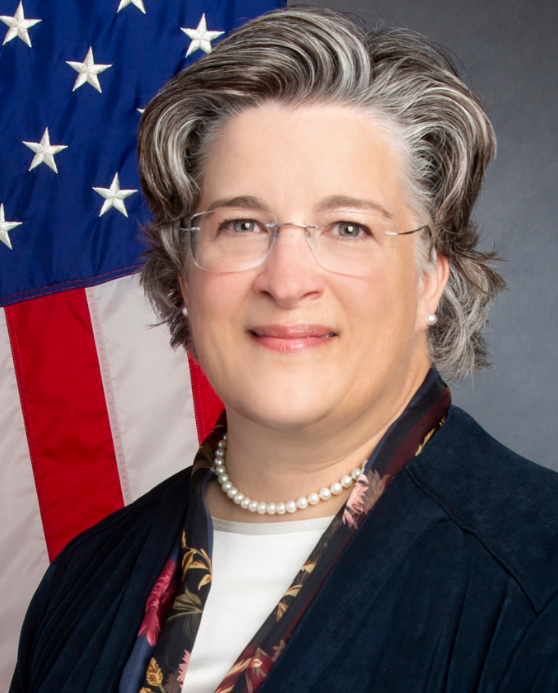
Anni Caputo, Former Commissioner for NRC
Yet observers close to the agency suggested she left rather than be compromised by the growing politicization of the commission. For an industry-friendly Republican appointee to walk away at a moment of pro-nuclear policy momentum, the signal was one of instability rather than continuity.
That same summer, the NRC’s most senior career official also departed. Mirela Gavrilas, the Executive Director of Operations and a 21-year veteran of the agency, retired at the end of June. Her position, often described as the commission’s operational backbone, was a critical loss of institutional knowledge.

Mirela Gavrilas, the former Executive Director of Operations of NRC.
Other high-level departures soon followed. Rob Lewis and Scott Morris, both senior staff with decades of experience, also left the NRC in 2025.

Rob Lewis (left) and Scott Morris (right) retired this year (2025).
Agency insiders have described the collective resignations and retirements from the Executive Director’s office as unusually disruptive, stripping away the leadership core that had anchored the agency through earlier transitions.
Political Policy and Context
The leadership upheaval at the NRC has unfolded against the backdrop of sweeping political changes. In 2025, President Trump signed a series of executive orders that placed the commission under direct presidential control through the order “Ensuring Accountability for All Agencies.”
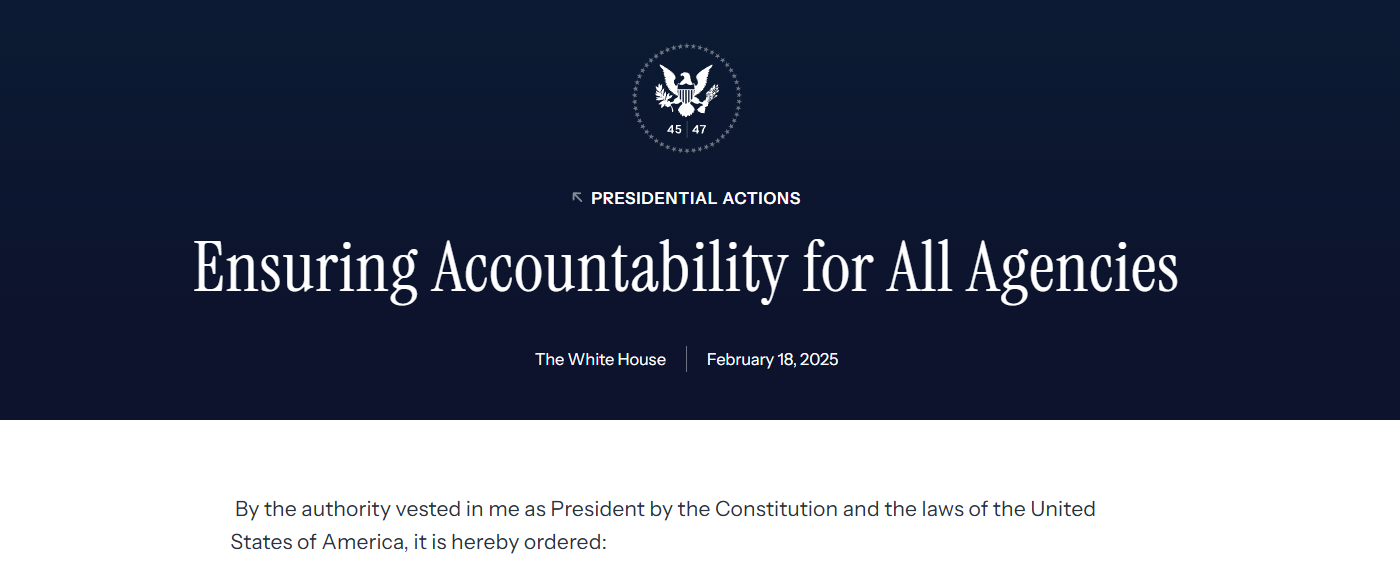
Screenshot of order from the White House
These directives also called for shorter safety review timelines, a reduced regulatory workforce, and set the ambitious goal of quadrupling nuclear power output by 2050. Supporters hailed the orders as a bold step to accelerate nuclear energy development, while critics such as University of Illinois professor Katy Huff warned they represented a textbook case of regulatory capture.

Katherine Huff, Professor of Nuclear Engineering; photo University of Illinois
The year before, Congress had passed the bipartisan ADVANCE Act of 2024, which directed the NRC to streamline licensing for small modular reactors and other advanced designs.
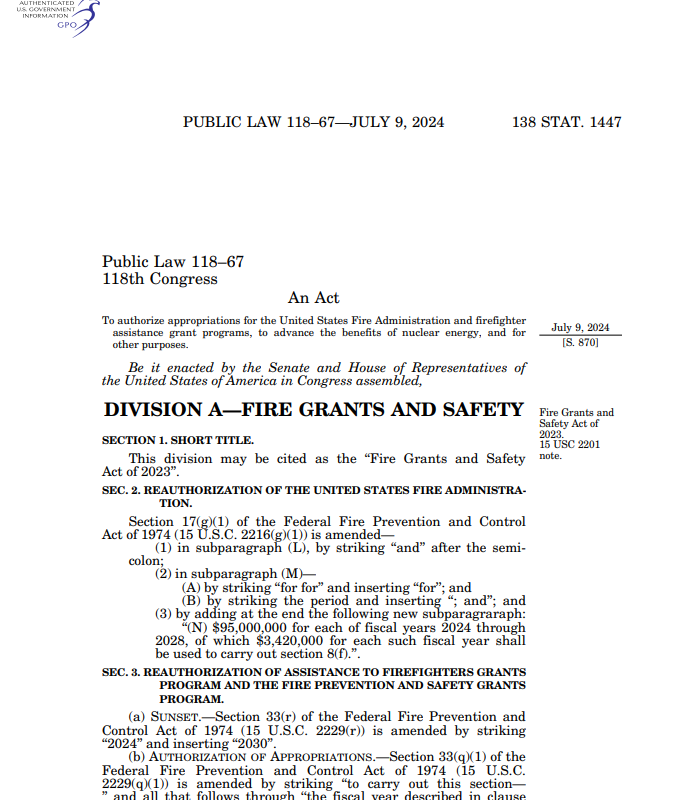
Screenshot of ADVANCE Act
Industry groups welcomed the effort to modernize the regulatory process but cautioned that indiscriminate staff cuts could slow progress rather than speed it up. As one past president of the American Nuclear Society put it, reform of the NRC should be done with a scalpel, not a meat cleaver.
Workforce Dysfunction
An internal audit by the NRC’s Office of Inspector General in December 2024 painted a stark picture of an agency struggling to maintain its workforce.
Screenshot of Audit
On paper, the NRC has been effective at retaining staff, with attrition holding at 7.4 percent in fiscal year 2023, about the same as the federal average. Beneath the surface, however, recruitment is faltering. The agency is not bringing in new talent quickly enough to replace those who leave.
In 2023, the NRC set a goal of hiring 400 new employees to meet the anticipated demand from advanced reactor applications. Instead, the agency lagged badly, taking an average of 148 days to fill a position. The Office of Personnel Management’s benchmark is 80 days, and the federal government overall averaged 101.
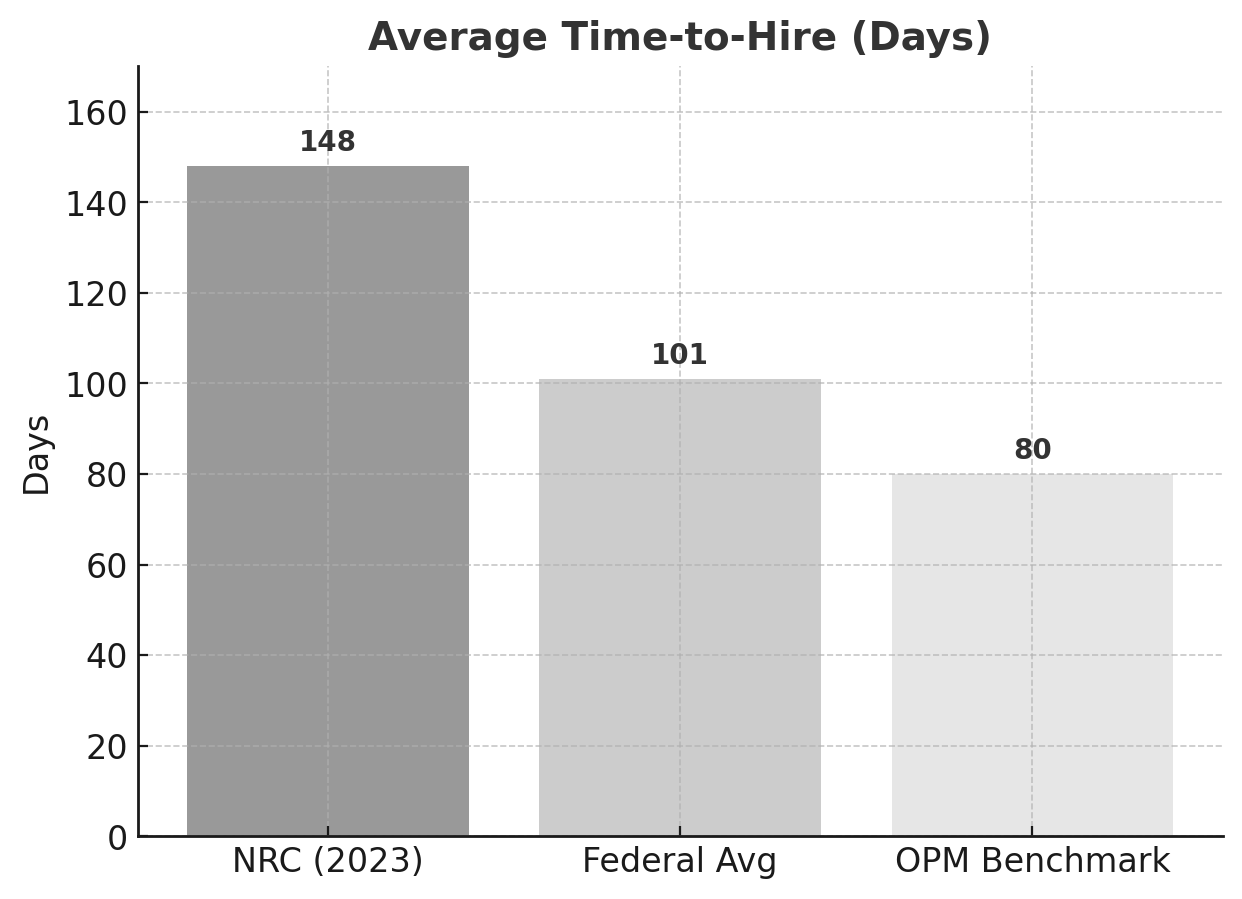
Data from OIG-NRC-25-A-03
That performance ranked the NRC 23rd out of 24 mid-sized agencies, next to last place on their list.
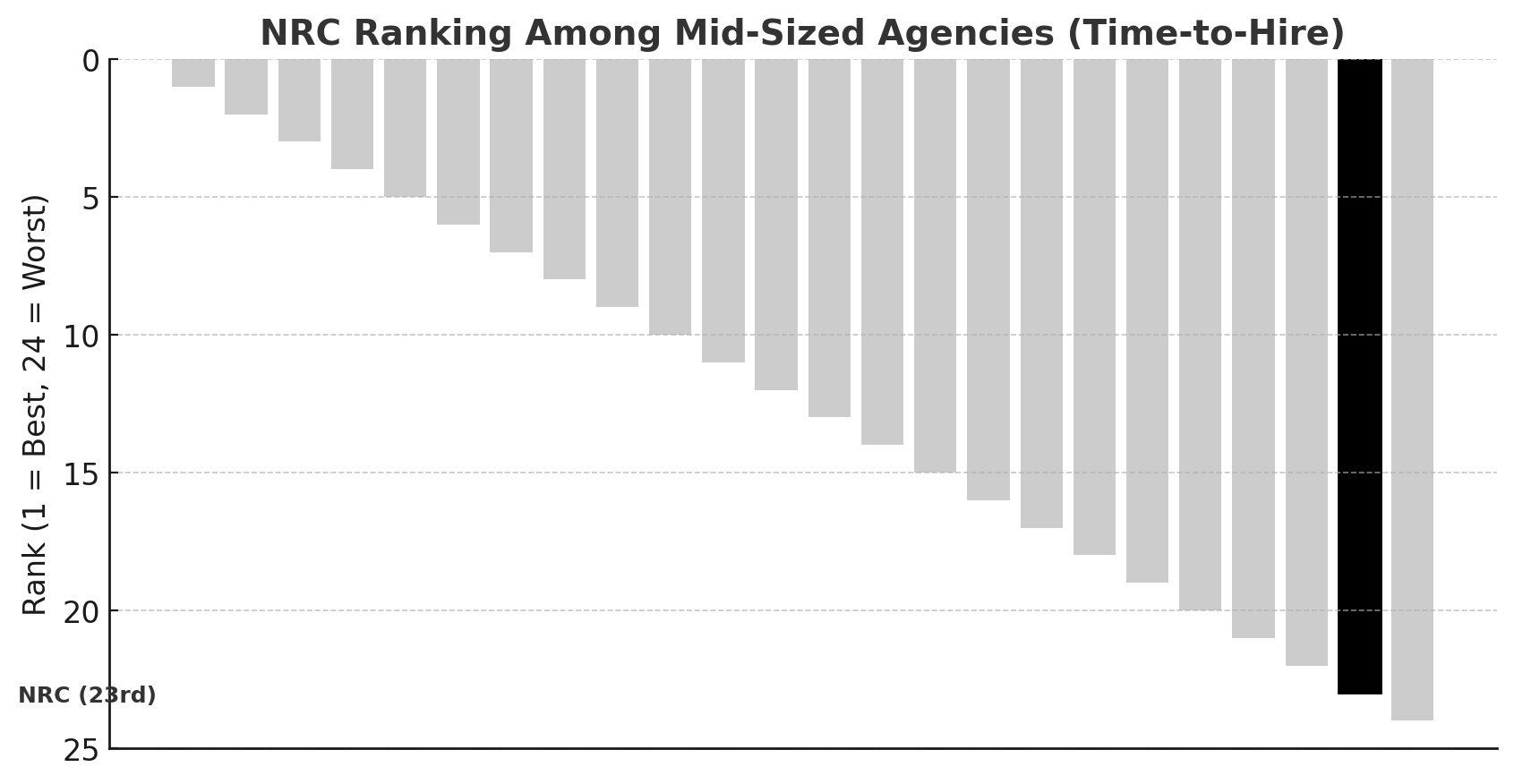
Data from OIG-NRC-25-A-03
The audit also found deep problems with the agency’s hiring data. Its Workforce Transformation Tracking System, the central tool for monitoring recruitment, was incomplete and unreliable. For 35 percent of external hires, there was no recorded time-to-hire at all.
Nearly half of the entries in the report that tracks why applicants decline offers contained no usable information. Outdated and inconsistent guidance left HR specialists without clear instructions or quality control.
The burden on human resources staff has grown heavy. The NRC has seen turnover among its own HR specialists, and the audit found it can take two years for new staff to fully learn “the NRC way.” Specialists described being buried in manual updates across multiple systems, each hiring action requiring hours of redundant work.
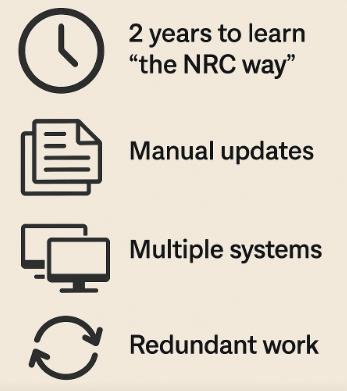
Image by DALL-E
All of this is happening at a moment of looming demographic risk. One-third of NRC employees are already eligible for retirement.
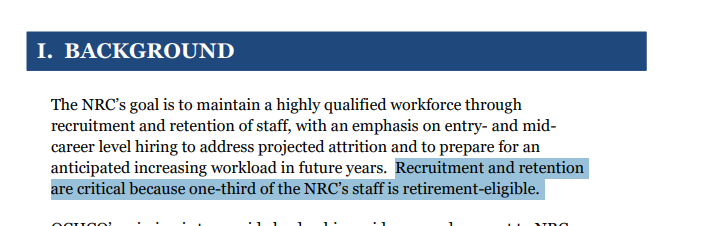
Screenshot from OIG-NRC-25-A-03
With a wave of retirements approaching just as the commission faces an influx of applications for advanced reactors, the agency may soon find itself without enough experienced staff to carry out its mission.
Expert and Industry Reactions
The exodus at the NRC has stirred both alarm and calculation among those who follow nuclear policy. Pro-nuclear advocates worry that the resignations and firings could derail the momentum for advanced projects just as Washington is leaning on the industry to expand.
Emmet Penney, a senior fellow at the Foundation for American Innovation, warned that the instability could “strangle the nuclear renaissance in its crib.” Adam Stein of the Breakthrough Institute described the resignation of Annie Caputo as a setback for reformers inside the agency who had pushed for a faster and more flexible licensing process.

Adam Stein, Director of the Nuclear Energy Innovation; image: The Breakthrough Institute
Former commissioners, who have seen these cycles before, frame the upheaval as part of a larger pattern. Victor Gilinsky, one of the NRC’s founding members, argued that the model of a five-member commission may no longer serve the public, saying the country needs “someone in charge whose neck you can wring if something bad happens.”

Victor Gilinsky, a founding member of NRC
Peter Bradford drew a comparison to the 1970s, when resignations appeared during an era in which the promotional side of nuclear power often overpowered the safety mandate.

Peter A. Bradford, former NRC Commissioner
Independent watchdogs are equally concerned. Edwin Lyman of the Union of Concerned Scientists said that the removal of Chair Christopher Hanson undermined the commission’s independence and raised the risk to the public at a moment of high-stakes change.
Political leaders are now echoing those worries. Senator Shelley Moore Capito of West Virginia said the resignations have left the NRC weakened just as the commission is being asked to license small modular reactors.
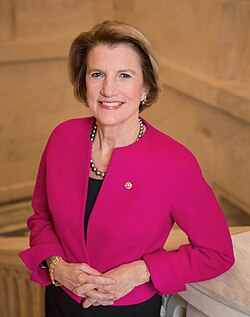
Senator Shelley Moore Capito; photo via WikiCommons
The American Nuclear Society and the Nuclear Energy Institute, two of the industry’s most prominent voices, stressed that only a fully staffed and effective commission can maintain public trust in nuclear energy.
Conclusion: Why It Matters for Communities
The NRC is supposed to be the referee that decides whether nuclear projects near towns are safe. For decades, its independence gave communities at least some measure of confidence that safety, not politics, would drive decisions. That confidence is now being tested.
If the experts inside the agency no longer trust the process enough to stay, why should the public trust it?
Communities weighing the risks of new small modular reactors or fuel storage sites are left to wonder whether the NRC they face is still the independent regulator it was meant to be, or whether it has become a captured, hollowed-out institution. That is the uncomfortable reality behind the resignations, retirements, and firings. The people who know the NRC best are choosing to leave it.
If the scientists and leaders entrusted to guard the public are walking away, the question for every community is simple: Who exactly is left watching the reactor facilities?
Sources
Mother Jones / SEJ – Annie Caputo resignation, agency independence
https://www.sej.org/headlines/resignation-nuclear-regulator-seen-attack-agency-independenceANS Newswire – Trump NRC overhaul and Hanson firing
https://www.ans.org/news/2025-06-17/article-7116/trump-nrc-changesThe Quad Report – Fear and Loathing at NRC & TVA
https://thequadreport.com/fear-and-loathing-at-the-nrc-and-tva/Exchange Monitor – Wright returns, Caputo steps down
https://www.exchangemonitor.com/wright-returns-to-nrc-caputo-officially-stepped-downANS Newswire – Annie Caputo resigns
https://www.ans.org/news/2025-07-30/article-7245/the-nrcs-annie-caputo-resignsReddit thread – NRC EDO’s Office Shakeup
https://www.reddit.com/r/nuclear/comments/1l7a3pj/nrc_edos_office_shakeup/PoliticoPro – Bipartisan concern follows NRC resignation
https://subscriber.politicopro.com/article/eenews/2025/07/30/bipartisan-concern-follows-nrc-members-resignation-00482256The Hill – Trump fires Democratic NRC member Christopher Hanson
https://thehill.com/policy/energy-environment/5352837-trump-democratic-nuclear-energy-safety-commission-nrc/NRC OIG Audit (Dec 2024) – Recruiting and Retention Activities
(ML24353A227, Dec. 18, 2024)
 Boomtown or Meltdown
Leave a comment