
A veteran security expert cautions that behind the promises of clean power lie serious risks of waste storage, federal overreach, and long-term community safety challenges.
When Bill Tallen spoke at the recent Gillette meeting, he began with a clear statement of principle:
“For the record: I am not anti-nuclear. Next-generation nuclear power, done right, is very important to our energy future. Done poorly, we and future generations will suffer the consequences and pay the costs of correcting expensive mistakes with even more expensive fixes.”
Tallen is no stranger to the nuclear world. He spent thirty years working for the National Nuclear Security Administration within the Department of Energy. Twenty of those years were as a federal employee, and another ten were as a contractor.

His specialty was the safe and secure transport of special nuclear materials across the country. Few people in Wyoming can claim the same depth of firsthand experience with nuclear security, oversight, and risk management.
That background made his remarks in Gillette especially powerful. He was not there to sensationalize the risks or to dismiss nuclear energy altogether. He was there to warn that trust, transparency, and accountability are the only way forward.
Without them, Wyoming could be walking into a trap that stretches far beyond one company or one community.
Why Trust Matters
Tallen explained that the Department of Energy is in the business of promoting, designing, and subsidizing nuclear projects. The Nuclear Regulatory Commission is supposed to be the watchdog that enforces safety. Too often, however, those roles blur.
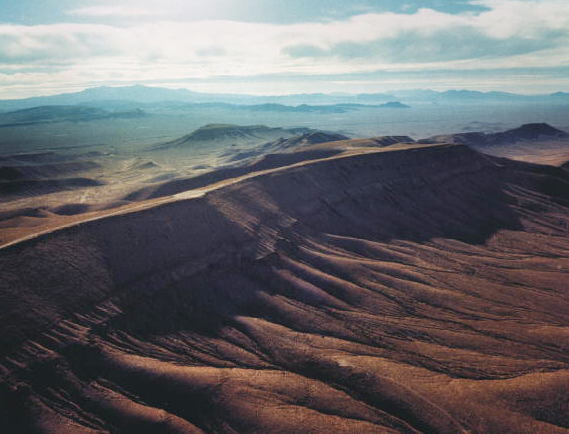
He gave the example of Yucca Mountain, the decades-long attempt to build a permanent nuclear waste repository in Nevada. Independent scientists raised serious issues about the DOE’s application.
Instead of fixing those problems, DOE assumed the NRC would cover for them. At one point, a DOE official even remarked that the NRC “may not question the promise of a sister agency.”
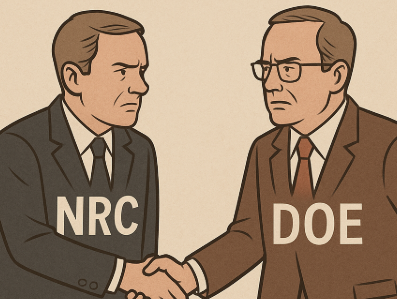
The NRC staff backed DOE almost every step of the way until the NRC’s own administrative judges called them out for being “spear carriers” instead of independent regulators.
The licensing board ultimately rejected the NRC staff’s position and sided with those independent scientists. As Tallen said:
“The board should not have had to police NRC staff like that. Both those agencies should be committed to ensuring, first and foremost, public health and safety and the public interest. It pains me to say this, but given that kind of history, we have to take all that we hear from DOE and NRC with a grain of salt.”
Without independent oversight and honesty from both agencies, public trust in nuclear projects collapses.
If the regulators cannot be relied upon to protect health and safety, then communities like those in Wyoming have every reason to question what they are being told.
Radiant Industries Under the Microscope
When Tallen turned his attention to Radiant Industries, the California start-up proposing to build and operate microreactors in Bar Nunn, he did not mince words:
“My government-financed B.S. detector started going off.”
He explained that Radiant’s press releases, website claims, and public statements have been inconsistent and, in some cases, misleading. He pointed to their claims about transportation safety as an example.

Radiant has compared its future shipments of microreactors to the government’s long record of safely transporting spent nuclear fuel. But according to Tallen, that comparison is inaccurate.
The government uses specialized, well-tested casks for shipments of spent fuel. Radiant plans instead to move its highly radioactive, thermally hot TRISO spent fuel inside its micro-reactors, which have not been tested to the same standards.
“Radiant claims to have modeled all scenarios for an accident or leak,” he said, “but my experience suggests that the value of computer modeling depends on the accuracy of the inputs. Without testing, that accuracy is an unfounded assumption.”
Another misleading claim involves the size of the reactors themselves. Radiant often describes them as being the size of a standard shipping container. In reality, Tallen pointed out, they are larger and heavier.
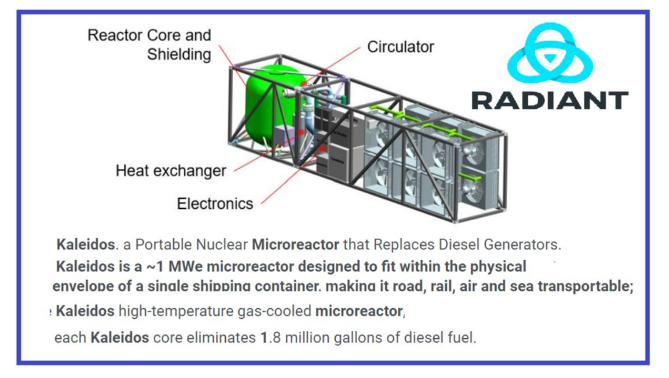
That means they will be classified as oversize and overweight shipments under Wyoming law. Each shipment will require escorts, restricted travel hours, and will have a real impact on roads and traffic.
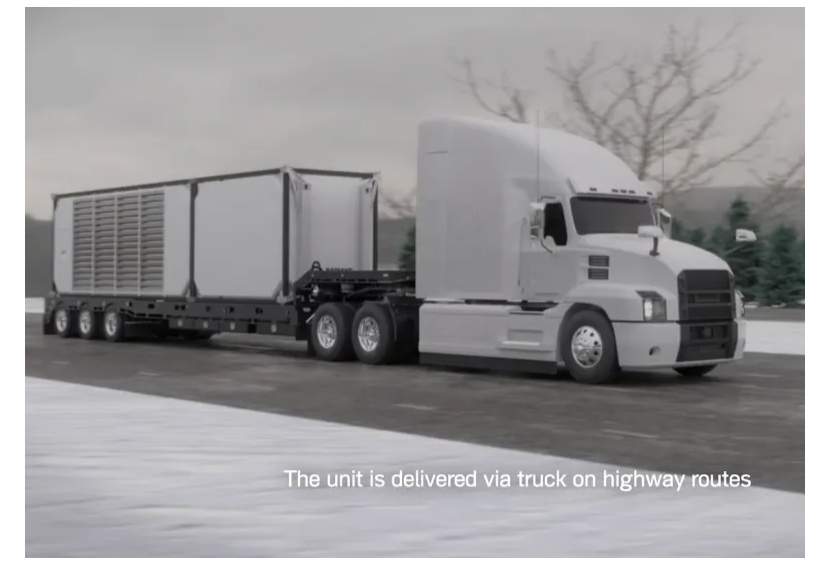
If Radiant achieves its goal of producing one reactor a week, and then adds return shipments for refueling, those impacts will multiply.
“These are not insurmountable problems,” Tallen admitted. “But their willingness to stretch, stroke, and pad the truth just might be. What else are they not being entirely honest about? Their cavalier attitude does not inspire trust.”
For Tallen, the issue is not just logistics but honesty. If Radiant bends the truth on details like size and safety, the public has every reason to question the rest of their promises.
The Spent Fuel Problem
Perhaps the most serious issue in Tallen’s view is Radiant’s plan for spent fuel. Current Wyoming law is explicit on this point. Wyoming Statute § 35-11-1506 states that high-level radioactive waste or spent nuclear fuel can only be stored at the site where it was generated.

In other words, the waste must remain where the reactor actually operated and produced it, until it can be moved to a federally licensed permanent geological repository or a consolidated interim storage site, neither of which currently exists.
For example, if TerraPower’s proposed reactor outside Kemmerer becomes operational, its spent fuel could be temporarily stored onsite under current law. That would not require a change in statute.

Radiant’s business model requires them to bring micro-reactors back from their customers’ out-of-state locations, extract the spent fuel, and store it at their Bar Nunn site. That is not permitted under current state statutes.
Tallen pointed out that Radiant has admitted that its entire business plan depends on changing Wyoming law.
“The camel’s nose in the tent is the change in state law that Radiant requires,” he said.
Once that law is changed, the door is open for much more than Radiant’s waste. Across the United States, there are about 100,000 metric tons of spent nuclear fuel, and more is produced every year.
“There is a lot of money to be made in operating a consolidated interim storage site,” Tallen said. “And there are a lot of companies sniffing around it. The Department of Energy fervently wants one to ten such sites, to relieve the mounting pressure on DOE from the commercial power industry, to live up to the U.S. government’s promise to take spent fuel off their hands.”
With its wide-open spaces and political leadership supportive of nuclear development, Wyoming could quickly become a target for consolidated storage or even permanent disposal.
Dry Casks and the Illusion of Temporary Storage
Radiant has claimed at different times that its dry casks for spent fuel will last thirty years, forty years, or even a hundred years.
Bill Tallen explained that this inconsistency is troubling, not because the casks fail after thirty years, but because the truth is uncertain and often glossed over.
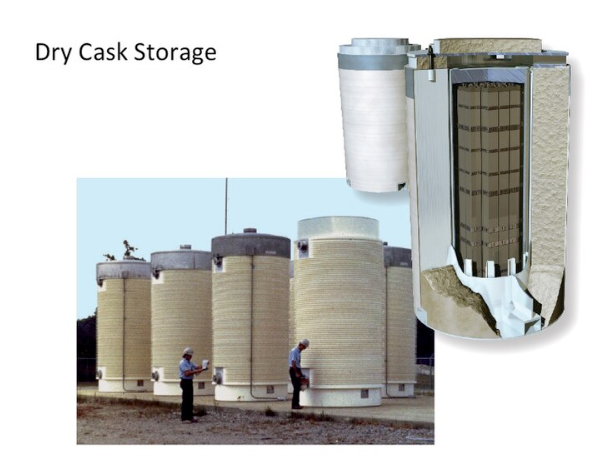
In the United States, dry casks for legacy spent fuel have been in use and monitored for about three decades. Government and industry sources generally agree that they should last for one hundred years.
No one, however, claims that they will safely contain spent fuel forever. The system depends on transferring radioactive material into new casks, in interim storage, again and again, until a permanent repository is built.
Whether you take Radiant’s thirty-year estimate or the broader industry’s one-hundred-year expectation, the scale of the problem is overwhelming.
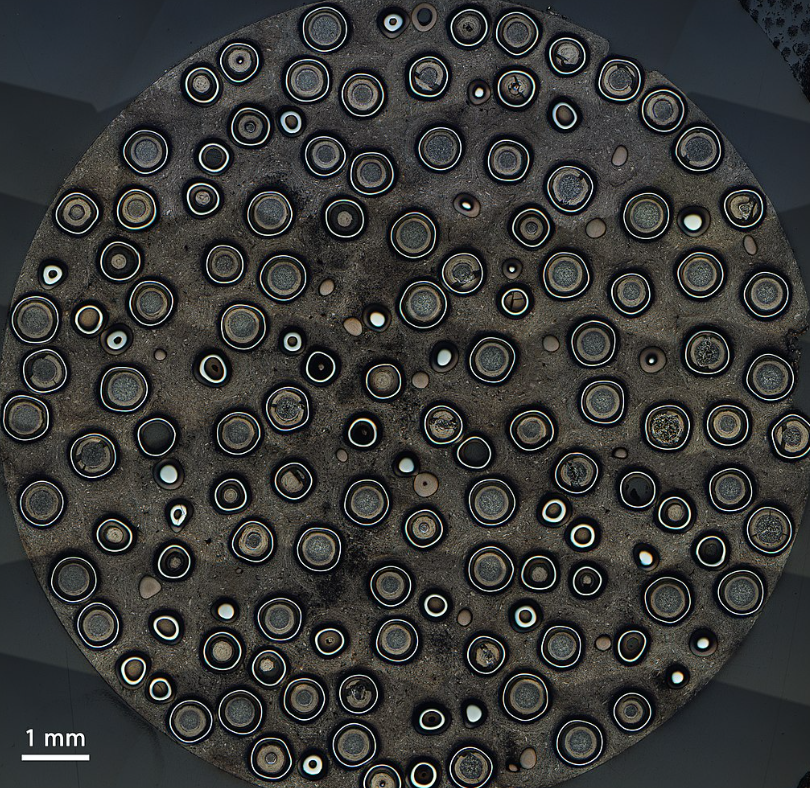
The new-generation TRISO spent fuel will remain dangerously radioactive for tens of thousands of years, and older fuels may last more than one hundred thousand years.
That means future generations would need to replace casks hundreds or even thousands of times. Tallen called this:
“Irresponsible at best and lunacy at worst.”
He reminded his audience that human institutions do not endure forever. Across recorded history, nations and empires have lasted on average about 250 years.
To assume that governments would continue managing spent fuel cask replacement schedules for ten thousand years or longer is to gamble on a future that cannot be guaranteed.
This is why, Tallen argued, the United States needs a permanent repository for spent nuclear fuel, and it needs one as soon as possible:
“Despite presidential orders and wishful thinking, since the multi-decade, 15 billion dollar failure to open Yucca Mountain, there is no federal permanent repository site selected, much less engineered and available. It is certainly not imminent. The shortest realistic estimates I have found, by experts within the community, of the time required to open one, from a standing start today, are 40 years or more if all goes well.”
For Tallen, this is the central issue. Until the country identifies, builds, and opens a proper permanent repository with true public consent, all talk of temporary surface storage is misleading; temporary will become effectively permanent, as it already has over the last forty years.
Without that permanent repository, every new nuclear project adds to a burden that will fall to descendants who may not have the ability or even the willingness to continue the work.
Security Risks
Tallen also highlighted the danger of treating TRISO fuel as if it were not a potential security risk. It is enriched close to the threshold for highly enriched uranium and could be attractive to anyone seeking to make a radiological dispersal device, commonly known as a dirty bomb.
Protecting such material requires an extraordinary level of security, which is both expensive and difficult to maintain. As Tallen put it:
“There are few problems that cannot be solved with a sufficient quantity of high explosives.”
To pretend otherwise, he warned, is to underestimate the threats we face. TRISO fuel is not just a technical or engineering challenge; it is a national security issue. It would require around-the-clock protection, specialized transport procedures, and a long-term commitment of resources measured in generations, not years.
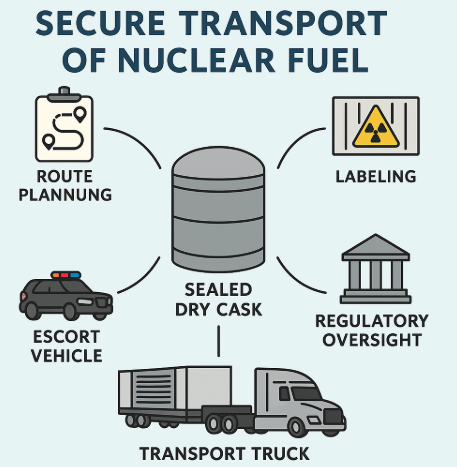
Tallen’s concern is that both regulators and private companies often speak about security as if it were a box to be checked, rather than an obligation that will stretch far into the future.
Without acknowledging the scale of that responsibility, Wyoming communities could find themselves carrying a risk that was never fully explained at the start.
Lessons from Abroad
To show that nuclear energy can be managed responsibly, Tallen pointed to Sweden and Finland. Both countries developed waste repositories that gained public trust because they maintained strict standards, chose sites based on science, and kept the focus squarely on safety.
“It is not making a show of consulting the public that gains trust,” he quoted a former NRC commissioner as saying. “You need a good technical plan to start with and demonstrated competence and a sense of responsibility to carry it out.”
By contrast, the United States has floundered, spending decades and billions of dollars on Yucca Mountain without success. The difference, Tallen argued, comes down to honesty and technical competence.
What This Means for Wyoming
For Wyoming residents, the stakes could not be higher. Radiant is asking for a change in state law that would alter the future of nuclear waste management in America. If that law is changed, the state could become a magnet for spent fuel from across the nation.
“Our legislature narrowly defeated the first attempt to change that law earlier this year,” Tallen reminds readers. “But it will take continued vigilance and effort to prevent it from happening in the future if you do not want Wyoming to become the nation’s radioactive waste dump.”
Tallen is not opposed to nuclear power. He believes it can and should be part of our energy future. But his message is one of vigilance. Wyoming cannot afford to take companies or agencies at their word.
It cannot afford to let temporary optimism blind it to permanent risks. And it cannot afford to pass laws that open the door to becoming the dumping ground for the nation’s most dangerous waste.
 Boomtown or Meltdown
Leave a comment